
Summary
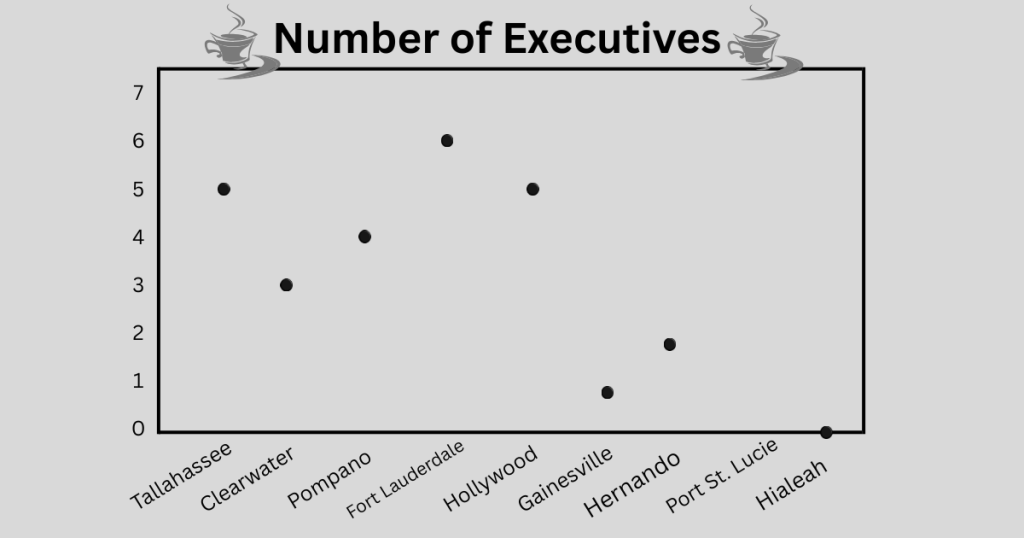
The City of Tallahassee pays executives the second highest out of cities we compared based on Tallahassee’s own comparison as well as suggestions from neighbors.
The city recently voted to offer current employees the opportunity to quit and receive $20,000 or 12 weeks of pay (whichever is greater). This comes at the direction of the State’s legislation HB1329 (Local Government Financial Transparency and Accountability ACT).
The city is interpreting the section 166.241 as required to implement a 10% budget reduction. However, nowhere does the statute state they have to implement the 10% reduction. The statute describes this as only an exercise, using language like “identifying” and “potentially reduce.”
“(b) The municipality shall hold a budget workshop at which the governing body of the municipality shall perform a budget reduction exercise, identifying strategies to potentially reduce the ensuing fiscal year budget by 10 percent in comparison to the current year budget without compromising essential public services, such as law enforcement or fire services, or legal obligations. The municipality shall post such exercise on the municipality’s official website or the county’s official website, as applicable, in a portable document format or a similar electronically accessible form that can be downloaded and is independent of the original software and hardware used to create the document, or a link to a recording of the budget workshop. The budget reduction exercise must occur at least 14 days before final budget adoption.”
The city’s plan to first reduce hardworking neighbors is in and of itself unacceptable when our current executives are cumulatively costing our community over $1,544,193 not including benefits. Our costs includes Thomas Whitley and Allison Farris. We consider them “assistant managers” since the organizational chart lists them at the same level as the assistant managers and they don’t report to the assistant city managers.
Jeremey Matlow published his statement and thoughts on the reasons the city is providing this as an option. He describes the intentions of this action as being a “golden ticket” for executives to leave the city now with 12 weeks of pay. The average pay of our executives is $125/hour. This would mean about $60,000 if an executive accepts this “buy out.”
While waiting on requests to be returned, City Manager Reese Goad announced his early retirement. This means that the vote recently passed by the board will apply to him. A public records request from the city places his pay at $304,647.95 annually. This means that Goad will be eligible for $76,161.98 as a “buy out.”
The Outlier Municipalities
Let’s compare our local government to that of other municipalities. Our process for selecting municipalities is based on the same municipalities city executives have historically compared to Tallahassee. We also expanded the comparison for our neighbors to submit municipalities for comparison. We limited our comparisons to Florida so the cities will be operating under similar state and environmental circumstances. When requesting the pay for all municipalities we simply stated, “I would like to request the salaries of the city manager and assistant city managers (or position equivalent).”
The first and most notable cities to discuss are Gainesville and Hialeah.
When Gainesville responded to our team they explained to us that “the Interim City Manager’s annual salary is $245,000. We do not have an Assistant City Manager or any positions that would be equivalent.” This means that the total they are spending on a city manager and assistant city managers is only $245,000. The Gainesville Sun reported that the city manager stepped down in November. Upon looking at Gainesville’s website, the city manager does have a “team” of individuals listed as the city manager’s executive leadership team. At the time of writing this post we requested the salaries of those individuals to include in this cost and will update upon receiving that request.
The next outlier we received was the city of Hialeah which stated, “The City of Hialeah Human Resources Department has advised we do not have a City Manager or Assistant City Managers. We have a strong-Mayor form of government. The Mayor’s salary is $190,000 (he serves in the capacity of City Administrator/Manager.)” This would indicate that Hialeah only spends $190,000 on City managers and assistant city managers. Upon investigating their website they explain how the Mayor is responsible for the day to day operations of the city, all the department heads report to the Mayor directly, and the Mayor does not have a voting position but does have veto power on the commission. The Mayor is also responsible for preparing and presenting the annual budget. Our team actually chose the City of Hialeah due to their population size being greater than Tallahassee.
The third outlier is Hernando County. They have a similar population size as Tallahassee and only have a County Administrator and a Deputy County Administrator totaling only $429,812 a year.

Further Comparison
The other municipalities we requested salaries from included what appears to be all assistants (Hollywood even including an executive with a different title but considered on the same level as the other assistants). Port St. Lucie at the time of writing this has not responded yet.
Looking at the salaries compared the City of Tallahassee, Fort Lauderdale is the only city that is paying more for executives. Whenever our team publishes salaries, we always receive feed back about population size, Tallahassee being a university town, and the services offered by the city. While these factors are important to compare they should not be used to distract or even excuse public dollar misuse.
Out of the municipalities compared, Fort Lauderdale and Hernando County are both similar in population but vastly different in the number of executives. Hernando only uses two while Tallahassee and Fort Lauderdale use 5-6 city managers. Both Hernando and Fort Lauderdale do not own their own utilities.
Gainesville is known for having FSU’s rival University and they have a population about 50,000 less than Tallahassee. Gainesville also owns it’s own electric company as well (Gainesville Regional Utilities). Currently they have an interim city manager and as stated above they reported no comparable positions to assistant manager. However, we have requested what they have called the City Manager’s Team.

More Executives?
Does Tallahassee actually have more executives than just the assistant managers? We checked the municipalities that submitted their requests to us and with the exception of Gainesville, their organizational charts appear to line up with what is stated in the records request. Even Hialeah (who operates under a strong mayor), only has department heads as the next layer of management completely eliminating the city manager and assistant city manager positions.
However, the City of Tallahassee places two people on the same line as the assistant managers (Operations and Innovation as well as Communications and Engagement). We have a request for the pay of the Communications and Engagement position. Assuming it is the same as the Operations and Innovation($208,000), this would increase the total amount spent on our executives by about $416,000 annually. If we include these two positions, our city pays just under $2million for executives and actually have 7 executives.
Municipal Comparison Matters
Ultimately comparisons matter. When city managers are drafting “Buy out” deals for employees to take and then a mere few weeks later they- themselves- are taking the buy outs, it has a negative impact on public trust. The comment sections on social media have all been celebratory- but not celebrating with him. That in itself speaks of the fruit he has in our community. Many are connecting the rushed sales of public assets to Goad’s departure and retelling experiences of his demeanor when interacting with him.
A short time from now, this list will need to be updated and our team’s hope is that it will begin to reflect a city that is conservative with executive expenditures and intentional in caring for our hardworking neighbors under city employment.
The more our local government focuses on our neighbors in our community the more we all (not just a handful of executives) can enjoy the benefits of our tax dollars. We are better and more informed together.




3 Responses
The upper tier pay structure at COT is absurd, without question, there is too much bloat at the top. Saying that, in your comparison cities you need to match not only populations, but services offered: fire, police, utilities, airport and then factor whether the cities you’ve chosen for comparison are county/city split, or incorporated, or non-incorporated; each city’s leadership structure; weak mayor, strong mayor, etc., and then when you find matching cities and services offered and matching operational budgets then an accurate comparison can be made.
Even populations are wildly different, I see you compared Gainesville, which is in some light as accurate, but an additional factor is the transient population of students and proximity to metro areas affecting that movement. Draw a radius 150 miles around Tallahassee and look at the towns you’ve looped in, Panama City, Dothan, and now do that to Gainesville, Orlando, Tampa, Jacksonville. Tallahassee is an effective island, and Gainesville isn’t. As such everything inside Tally’s MSA is very different than central or south FL.
Tallahassee is very hard if not impossible for an apples to apples comparison inside of Florida. I can go on and on, but while I agree executive team management is largely out of whack, I think that conversation could be turned into what’s efficient and what isn’t which isn’t simply a salary to salary, or X service to Y service. Does COT need three ACMs, a DCM, and a CM? I don’t know.
COT has some huge departments that serve the community with significant services, from PRNA to Police, saying that do the people currently in those slots seem capable? I don’t know.
The city has literally bought themselves a lot of awards for publicity, but in terms of leadership quality or foresight, I am not sure if those currently serving are the best we can do.
Thank you for this thoughtful comment. We intended to originally add more of a breakdown. To your point Tallahassee is an island and very difficult to compare within Florida. We did want to keep the parameters to Florida to exclude state government differences that affect laws and can affect municipal spending.
The cities chosen were chosen based on the city historical comparisons with a few other cities that are reader submitted.
Ultimately, this serves as a simple conversation starter and we hope to expand on it more. Please feel free to submit more factors and even cities you’d like to see compared to us 850CapitalTea@gmail.com or comment here and we will make a note of factors to add to the next discussion.
So this is where the comparison gets somewhat ridiculous. The closest match is Orlando, in terms of number of sworn police officers, the number of fire stations, full service utilities offered, airport, and operating budgets. COT and CFL (Orlando) have populations (not including MSA) of 205k, 350k+/-, sworn officer counts, 500/800, fire departments, 16/17, operating budgets 1.2/1.6B, but as you and I know, Orlando is not Tallahassee, but its a closer comparator than Gainesville who has a smaller population, less sworn officers, less fire stations, and a smaller operating budget.
I understand trying to stay within the state because of a litany of laws, rules and governance issues, but in terms of comparison it might be best to identify individual departments of similar scope and work backwards to see how the pieces fit. You can establish the leadership structures backwards and determine efficiency based on populace/demographics/socio-economic factors. Like pull out TPD, go from sworn officers and go backwards, compare with crime rates, types of crime, etc., it’s the granular details of the whole which will lead you to the best comparisons, but it’s also a lot of work versus X to Y comparisons, but I get it.